What Are Plyometrics Really Doing?
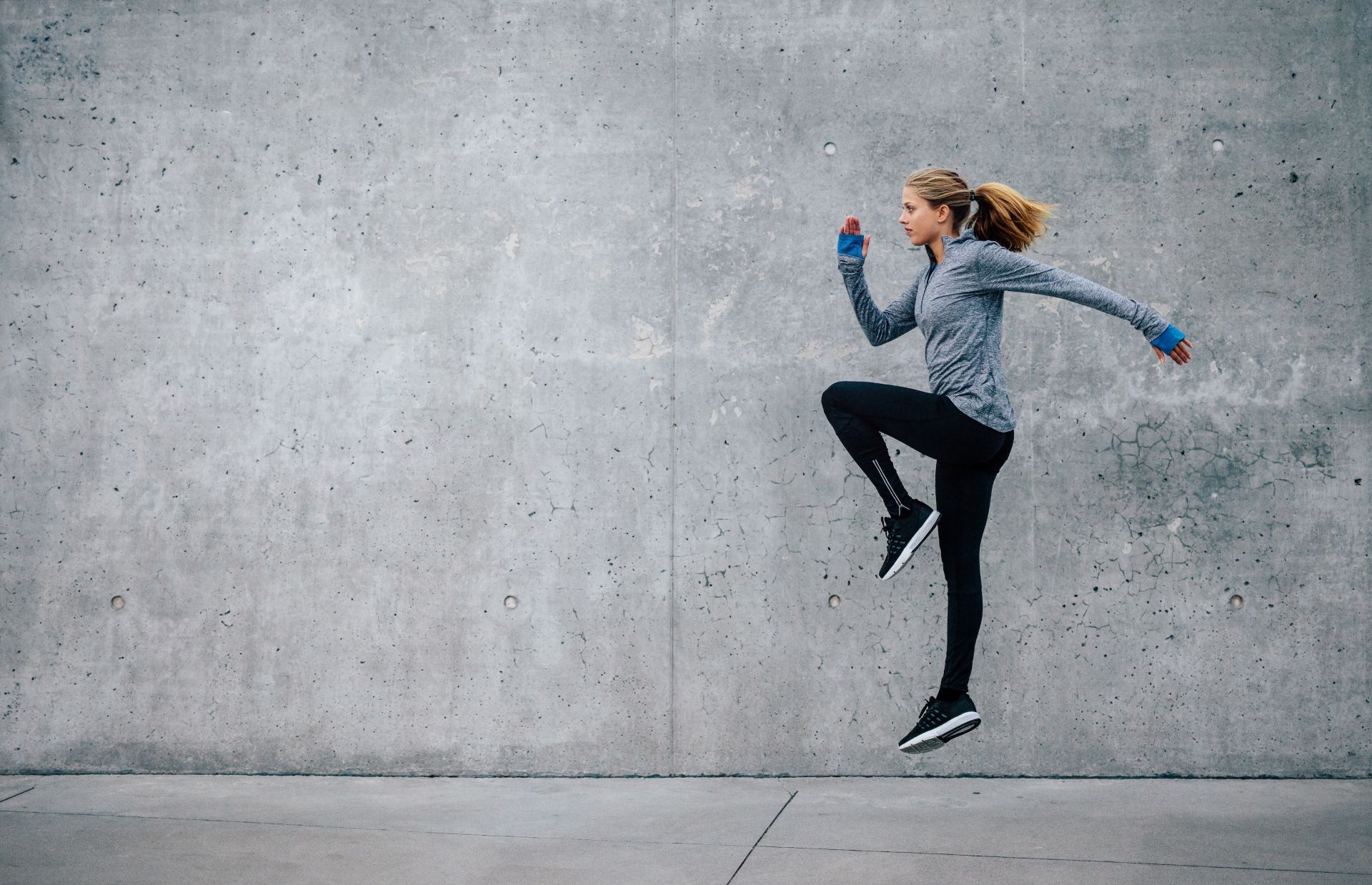
Plyometric exercises — hops, skips, jumps, bounds — are often described as "training the SSC." Traditionally, these exercises have been explained using a spring model, where the body absorbs and releases energy like an elastic band.
But the human system is not a passive spring. It is:
- Adaptive
- Variable
- Context‑sensitive
- Dynamically problem‑solving
What athletes are really doing in plyometric tasks is organising their movement under conditions of:
- Speed
- Ground‑reaction demands
- Time pressure
- Reactivity
With repeated exposure, athletes naturally adjust:
- Ground interaction strategies
- Timing
- Coordination
- Movement solutions
Rather than "training a mechanism," plyometrics expose athletes to a set of constraints that provoke natural adaptation.
How Development Changes Plyometric Ability
Youth athletes do not interact with plyometric tasks in a fixed or predictable way. Growth, maturation, and experience all influence:
- Pre‑activation
- Tendon behaviour
- Coordination
- Perception of the task
Younger or less experienced athletes often exhibit:
- Longer ground contact times
- Different movement strategies
- More exploratory mechanics
These are not deficits. They are part of the system learning to solve movement problems through natural exploration [7, 12].
Strength Training + Plyometrics: A Complementary Relationship
Lower strength levels in young athletes are often linked to:
- Longer contact times
- Less efficient force application [12]
But strength training does not “fix” the SSC. It simply expands the toolbox by providing:
- New force experiences
- Better tissue tolerance
- Improved coordination under load
- General physical resilience [6]
Meanwhile, many plyometric skills emerge organically through play — running, jumping, landing, skipping.
Strength should not be a barrier to plyometric exposure.
The idea that a child must hit a certain strength threshold (like 1.5× bodyweight squats) before performing plyometrics is not supported by how biological systems adapt in the real world.
Both strength training and plyometrics should coexist throughout development.
How to Start a Plyometric Programme for Youth Athletes
Plyometrics cannot be prescribed like %1RM strength work. Their “intensity” depends on:
- Landing forces
- Ground interaction
- Individual coordination
- Tendon dynamics
Athlete experience [2, 7]
Early exposure should focus on:
- Slower, exploratory movements
- Longer ground contact times
- Lower impact forces [10]
- Rhythm + timing
- Coordination
“…Speed and efficiency emerge naturally — they are not programmed.”
Progression: Not Just More Intensity
Plyometric progression is not simply doing:
- Higher jumps
- Faster contacts
- Bigger impacts
Increasing task complexity is far more meaningful:
|
Simple → Complex Changes |
Outcome |
|
Two legs → One leg |
New stability + control demands |
|
Predictable → Reactive drills |
Faster decision‑making |
|
Stable ground → Variable surfaces |
Increased adaptability |
Each variation forces the athlete to reorganise coordination, timing, and control patterns. They need time to explore and stabilise these new solutions.
Volume, Contacts, and Frequency
Plyometric volume is often counted by “contacts,” but:
Not all contacts are equal.
A low hop ≠ a high‑intensity drop jump.
General guidelines include - Start with lower volumes
- Prioritise longer rest intervals
- Monitor movement quality, not aesthetic “technique”
- Emphasise coordination + control over maximal output
- “Quality” means the athlete is solving the movement problem effectively — not that they look like an elite jumper.
Summary
Plyometrics are frequently framed as training the stretch‑shortening cycle — but this view is limited. Instead of targeting a single mechanism, plyometrics give athletes access to dynamic, reactive environments that foster:
- Coordination
- Timing
- Rhythm
- Adaptability
- Robust movement strategies
Strength training and plyometrics should be viewed as overlapping exposures that enhance long‑term athletic development by expanding the athlete’s movement capabilities.
Youth development is not about perfecting a singular quality — it is about creating adaptable, resilient movers who can handle diverse demands.
References
-
Bedoya, A.A., Miltengerger, M.R., & Lopez, R.M. (2015). Plyometric training effects on athletic performance in youth soccer athletes: A systematic review. Journal of Strength & Conditioning Research, 29(8), 2351 – 2360.
-
Brearly, S., Wild, J., Agar-Newman, D., & Cizmic, H. (2017). How to monitor net plyometric training stress: guidelines for the coach. UK Strength & Conditioning Journal, 47, 15 – 24.
-
Chaabene, H., & Negra, Y. (2017). The effect of plyometric training volume in prepubertal male soccer players’ athletic performance. International Journal of Sports Physiology and Performance, 12(9), 1205 – 1211.
-
Chelly, M.S., Hermassi, S., & Shephard, R.J. (2015). Effects of in-season short term plyometric training program on sprint and jump performance of young male track athletes. Journal Strength & Conditioning Research, 29(8), 2128 – 2136.
-
Gaamouri, N., Hammami, M., Cherni, Y., Rosemann, T., Knechtle, B., Chelly, M.S., & Van Dan Tillaar, R. (2023). The effects of 10-week plyometric training program on athletic performance in youth female handball players. Frontiers in Sports and Active Living, 1 – 10.
-
Kumar, N.T.A., Oliver, J.L., Lloyd, R.S., Pedley, J.S., Radnor, J.M. (2021). The influence of frowth, maturation and resistance training on muscle-tenon and neuromuscular adaptations: A narrative review. Sports, 9(59), 1 – 24.
-
Lloyd, R.S., Meyers, R.W., & Oliver, J.L. (2011). The natural development and trainability of plyometric ability during childhood. Strength & Conditioning Journal, 33(2), 23 – 32.
-
Mathisen, G.E. (2014). Effect of high-speed and plyometric training for 13-year-old male soccer players on acceleration and agility performance. Journal of Sport Science, 5(2), 1 – 12.
-
McNeely, E. (2005). Introduction to plyometrics: converting strength to power. NSCA’s Performance Training Journal, 6(5), 19 – 22.
-
McNeely, E. (2007). Practical guidelines for plyometric intensity. NSCA’s Performance Training Journal, 6(5), 12 – 16.
-
Nicol, C., Avela, J., Komi, P.V. (2016). The stretch-shortening cycle. A model to study naturally occurring neuromuscular fatigue. Sports Med, 36(11), 977 – 999.
-
Radnor, J.M., Oliver, J.L., Waugh, C.M., Myer, G.D., Moore, I.S., & Lloyd, R.S. (2018). The influence of growth and maturation on stretch-shortening cycle function in the youth. Sports Med, 48, 57 – 71.
-
Ramirez-Campillo, R., Meyan, C., Alvarez, C., Henriquez-Olguin, C., Martinez, C., Canas-Jamett, R., Andrade, D.C., & Izquierdo, M. (2014). Effect of in-season low-volume high-intensity plyometric training on explosive actions and endurance of young soccer players. Journal Strength & Conditioning Research, 28(5), 1335 – 1342.
-
Singh-Bal, B., Jeet-Kaur, P., & Singh, D. (2011). Effects of a short-term plyometric training program of agility in young basketball players. Brazilian Journal of Biomotricity, 5, 271 – 278.
-
Thomas, K., French, D., & Hayes, P.R. (2008). The effect of two plyometric raining techniques on muscular power and agility in youth soccer players. Journal Strength & Conditioning Research, 23, 1 – 4.