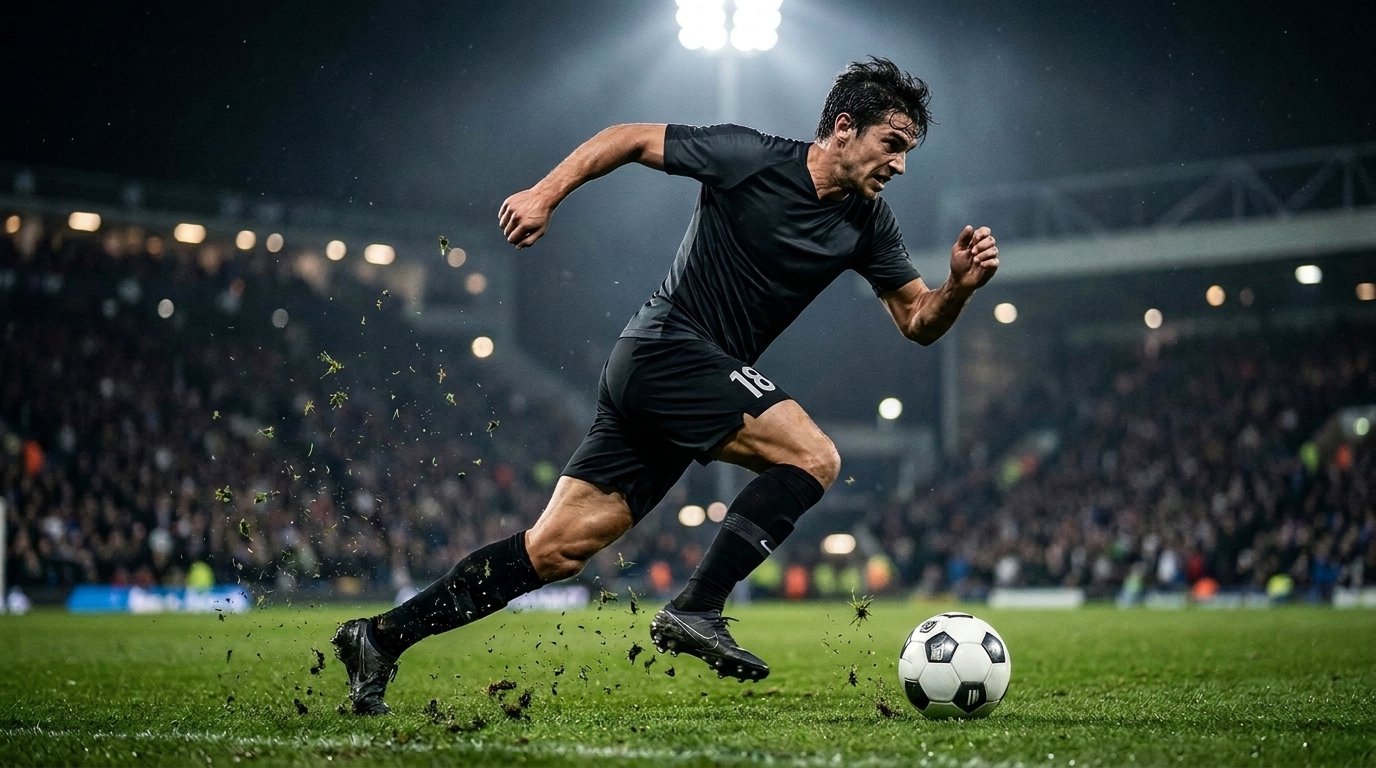

The competitive season presents a challenge for athletes and coaches. Training time becomes limited, competition demands increase, and managing fatigue becomes just as important as developing physical performance. However, reducing or removing strength and conditioning (S&C) entirely during this period can leave athletes without the stimulus needed to maintain the physical qualities developed during pre-season.
The objective of in-season S&C is to maintain the strength, power and physical capacity required for consistent performance while managing the additional demands of training and competition. Progressing every physical quality is not necessarily the priority.
Maintaining Strength Throughout the Season
Relative strength is a fundamental physical quality underpinning sporting performance. It contributes to an athlete’s ability to produce, control and attenuate high levels of force during acceleration, deceleration, and cutting.
However, maintaining relative strength throughout a competitive season requires an appropriate balance between training stimulus and recovery. Completely removing resistance training can lead to reductions in strength over time, particularly when athletes are exposed to prolonged periods without sufficient loading.
Cuthbert et al. (2021) examined the effects of resistance-training frequency on strength development in well-trained populations. Their findings highlighted that strength can be maintained with relatively low training frequencies, supporting the use of reduced but consistent strength-training exposure during the competitive season (1).
Similarly, Spiering et al. (2021) explored the minimum exercise dose required to maintain physical performance. Their review demonstrated that strength can often be maintained with substantially less training volume than is required to develop it, provided an adequate training intensity is retained (2).
This reinforces an important principle: in-season training does not need to replicate the volume or frequency of pre-season training. Instead, the aim should be to provide enough stimulus to maintain the physical qualities that matter, without creating unnecessary fatigue.
In-season training does not need to replicate the volume or frequency of pre-season training.
Provide enough stimulus to maintain the physical qualities that matter, without creating unnecessary fatigue.
Intensity High, Volume Low
One of the most effective ways to approach in-season strength training is to maintain relatively high training intensity while reducing overall volume.
The challenge is to expose the neuromuscular system to sufficiently demanding loads without adding excessive fatigue. Maintaining training intensity provides that loading stimulus, while limiting excessive sets, repetitions and supplementary exercises helps protect recovery between matches and training sessions.
For many athletes, this means prioritising a small number of key strength exercises, maintaining challenging loads and reducing the total number of working sets. The exact prescription will depend on the athlete, their training history, competition schedule and current physical condition.
The aim is to keep strength within the desired range without chasing unnecessary training volume or creating soreness that compromises subsequent performance.
Managing Readiness and Freshness
In-season S&C should be responsive to the demands placed on the athlete. Match congestion, travel, training intensity, sleep and accumulated fatigue can all influence how prepared an athlete is to train.
A session that is appropriate during a normal training week may need to change when an athlete is recovering from a demanding match or preparing for another competition. Following a fixed programme without accounting for these differences in readiness can be counterproductive.
The International Olympic Committee consensus statement by Soligard et al. (2016) highlights the importance of considering the relationship between training load, recovery and injury risk (5). Similarly, Bourdon et al. (2017) emphasise the value of monitoring training loads to help inform coaching decisions and understand an athlete’s response to training (6).
Monitoring does not need to be complicated. Athlete feedback, perceived exertion, soreness, sleep quality and general readiness can provide useful information. When available, performance measures such as jump height or bar velocity can also help identify changes in readiness.
Autoregulation: Adjusting Training to the Athlete
Autoregulation provides a practical way to manage the daily variation in an athlete’s readiness. Rather than prescribing every session rigidly, training can be adjusted according to how the athlete is responding on the day.
This might involve reducing the number of working sets, adjusting the load, removing supplementary exercises or changing the session altogether when fatigue is particularly high.
Hickmott et al. (2022) examined load and volume autoregulation in resistance training. Their review supports the use of autoregulated approaches as a method of adjusting training to individual performance and capacity (7).
In practice, autoregulation means making informed adjustments to keep the training stimulus appropriate and maintain consistency. It does not mean avoiding challenging sessions whenever an athlete feels tired. The goal is to avoid unnecessary fatigue that could compromise competition performance.
Strength, Resilience and Injury Risk
Maintaining strength throughout the competitive season is not just about preserving performance. It also plays an important role in maintaining an athlete's physical capacity and resilience to the demands of sport.
Lauersen et al. (2018) conducted a systematic review and meta-analysis examining strength training as an injury-prevention strategy. Their findings suggested approximately 66% lower injury risk across the included strength-training interventions (3). This provides strong support for maintaining appropriate strength-training exposure throughout the competitive season.
Neuromuscular coordination is another important component of injury resilience. Thorborg et al. (2017) demonstrated that structured FIFA 11 and FIFA 11+ injury-prevention programmes reduced overall football injury incidence. These programmes incorporate strength, balance, movement control and neuromuscular exercises, highlighting the importance of maintaining coordinated movement and physical control throughout the season (4).
How MatchFit Pro Supports In-Season Performance
MatchFit Pro automatically shifts athletes into low-volume, high-intensity concurrent maintenance blocks during the competitive season — preserving relative strength, power and speed in just two focused sessions per week without creating match-day soreness.
Before every session, the daily readiness check-in captures sleep, soreness, mood and fatigue to autoregulate training volume on the day, helping athletes stay strong, fast and resilient throughout a congested fixture calendar.
Practical Takeaways
Effective in-season S&C is about maintaining the physical qualities that support performance while respecting the demands of competition. Rather than removing strength training, coaches should consider how to make it more efficient and individualised.
Key principles include:
- Maintain consistency: Keep regular strength-training exposure throughout the competitive season.
- Prioritise intensity: Retain sufficiently challenging loads to maintain strength.
- Reduce unnecessary volume: Use fewer working sets and focus on key exercises to manage fatigue.
- Monitor readiness: Consider match demands, recovery, soreness and athlete feedback when planning sessions.
- Autoregulate where necessary: Adjust loads and volume according to the athlete’s daily response.
- Protect performance: The purpose of in-season S&C is to support competition performance, not create additional fatigue.
MatchFit Pro is an AI-powered S&C app built with qualified S&C coaches, designed to help athletes train safely and keep improving, with parental consent built in for younger athletes. Coaches can see how it supports athlete development at matchfitpro.com/coaches.
menu_book References (7) View citations
- Cuthbert, M., Haff, G.G., Arent, S.M., Ripley, N., McMahon, J.J., Evans, M. & Comfort, P. (2021). Effects of Variations in Resistance Training Frequency on Strength Development in Well-Trained Populations and Implications for In-Season Athlete Training: A Systematic Review and Meta-analysis. Sports Medicine, 51, 1967–1982.
- Spiering, B.A., Mujika, I., Sharp, M.A. & Foulis, S.A. (2021). Maintaining Physical Performance: The Minimal Dose of Exercise Needed to Preserve Endurance and Strength Over Time. Journal of Strength and Conditioning Research, 35(5), 1449–1458.
- Lauersen, J.B., Andersen, T.E. & Andersen, L.B. (2018). Strength training as superior, dose-dependent and safe prevention of acute and overuse sports injuries: A systematic review, qualitative analysis and meta-analysis. British Journal of Sports Medicine, 52(24), 1557–1563.
- Thorborg, K., Krommes, K.K., Esteve, E., Clausen, M.B., Bartels, E.M. & Rathleff, M.S. (2017). Effect of specific exercise-based football injury prevention programmes on the overall injury rate in football: A systematic review and meta-analysis of the FIFA 11 and 11+ programmes. British Journal of Sports Medicine, 51(7), 562–571.
- Soligard, T., Schwellnus, M., Alonso, J.M., Bahr, R., Clarsen, B., Dijkstra, H.P., Gabbett, T., Gleeson, M., Hägglund, M., Hutchinson, M.R., Janse van Rensburg, C., Khan, K.M., Meeusen, R., Orchard, J.W., Pluim, B.M., Raftery, M., Budgett, R. & Engebretsen, L. (2016). How much is too much? (Part 1) International Olympic Committee consensus statement on load in sport and risk of injury. British Journal of Sports Medicine, 50(17), 1030–1041.
- Bourdon, P.C., Cardinale, M., Murray, A., Gastin, P., Kellmann, M., Varley, M.C., Gabbett, T.J., Coutts, A.J., Burgess, D.J., Gregson, W. & Cable, N.T. (2017). Monitoring Athlete Training Loads: Consensus Statement. International Journal of Sports Physiology and Performance, 12(Suppl 2), S2-161–S2-170.
- Hickmott, L.M., Chilibeck, P.D., Shaw, K.A. & Butcher, S.J. (2022). The Effect of Load and Volume Autoregulation on Muscular Strength and Hypertrophy: A Systematic Review and Meta-Analysis. Sports Medicine - Open, 8, 9.